Why Some Old Books Are Worth More Than Others
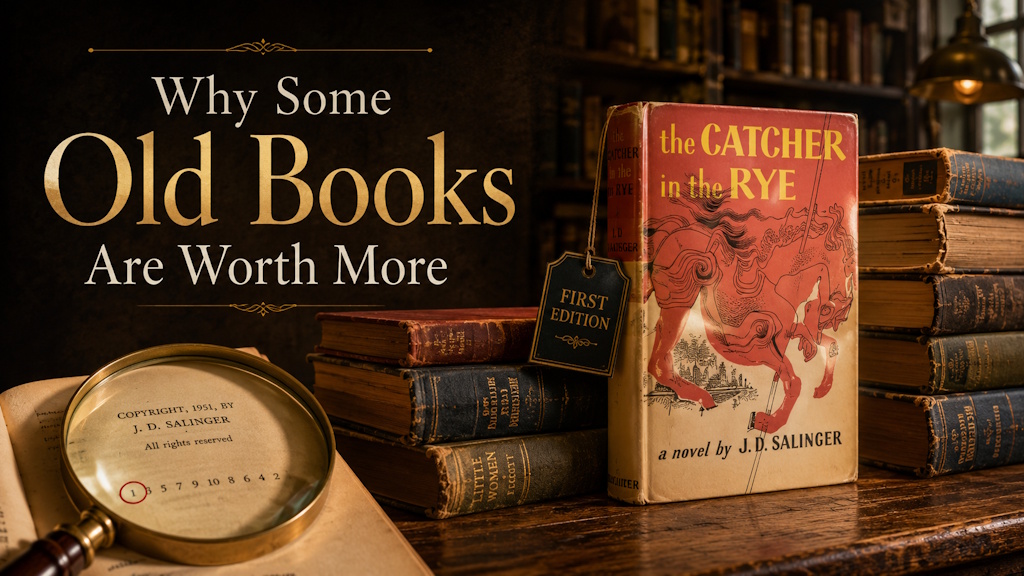
A lot of people look at an old book and assume age equals value. That is one of the biggest mistakes in book collecting. Plenty of old books have little market demand. At the same time, some books that do not look special at first glance can bring serious money.
The difference usually comes down to a few things that casual owners miss. Edition matters. Printing matters. Condition matters. Dust jacket matters. Demand matters most of all.
If you are sorting books from an estate, cleaning out shelves, buying at yard sales, or checking books before donating them, it helps to know what actually separates a common copy from one buyers will pay up for.
Old Does Not Mean Valuable
A book can be 100 years old and still be worth very little. Age helps only if other value points line up with it. A title needs buyer demand. It needs the right edition. It needs to be in solid condition. In many cases, it also needs the original dust jacket.
That is why one old book ends up in a five dollar pile while another sells for hundreds. The market does not reward age alone. It rewards scarcity, desirability, and completeness.
What a First Edition Really Means
Many people use the phrase first edition too loosely. They see an early copy of a book and assume they found something rare. That is not enough.
A true first edition usually means the book came from the first printing of the first published edition from the original publisher. That is the version collectors usually want most. Later printings may still say first edition on the copyright page in some cases, which creates confusion. Publishers used different methods to mark printings, and the wording is not always simple.
A clean copy of a later printing can still have value, but it often does not bring first printing money.
First Edition Vs First Printing
This is where many sellers get tripped up. A book may be part of the first edition run but not from the first printing. Collectors often care about that difference a lot.
A publisher might issue a first edition and then print more copies soon after. Those later copies can still belong to the same edition, but they are not the earliest state collectors chase. A first printing is usually the strongest copy from a collectible standpoint, especially for modern fiction, major authors, and breakout titles.
That small detail can mean the gap between a modest sale and a major one.
How to Tell if a Book Is a True First Edition
There is no single rule that works for every publisher. Still, there are common signs people check first.
Look at the copyright page. You may see a number line. If the line includes 1, that is often a good sign. You may see the words first edition or first printing. You may also see no later printing statement at all in older books, which can make identification harder.
Collectors also look for issue points. These are little details tied to the earliest copies. It could be a typo that got corrected later. It could be a specific price on the jacket. It could be a certain color board, binding detail, or page code.
This is why a book that looks just like another copy can have a very different selling price.
Why Dust Jackets Matter so Much
A lot of the value in collectible books sits in the dust jacket, not just the book itself. Remove the jacket, and the price can collapse fast.
For many twentieth-century first editions, the jacket is a major part of the package collectors want. It shows the original design, original price, and period look. It also tends to get damaged or thrown away, which makes surviving copies harder to find.
A first edition without its jacket may sell for a fraction of the price of the same book with a bright, clean jacket. In some cases, the gap is huge.
If you are checking old books, do not treat the jacket like disposable paper. It may be the main reason the book has value at all.
Condition Can Kill Value Fast
People often focus on the edition and ignore the condition. Buyers do not. A desirable book in rough shape can drop hard in value.
Things that hurt price include:
-
Torn or clipped dust jackets
-
Heavy writing or underlining
-
Loose pages
-
Water damage
-
Smoke odor
-
Ex library stamps and pockets
-
Cocked spines
-
Mold or mildew
-
Missing pages or plates
A worn first edition is not worthless, but condition changes the buyer pool. A collector may hold out for a stronger copy. A dealer may still buy it, but at a much lower number.
Why Demand Beats Scarcity
Some books are genuinely scarce and still do not sell for much. That sounds backward, but scarcity without demand does not create strong prices.
A forgotten title by an unknown author may be hard to find, but if nobody is looking for it, the value stays soft. On the other hand, a popular title by a major author can stay strong even if many copies exist, because buyers keep chasing it.
That is why big names, major debuts, prize winners, banned books, cult favorites, genre classics, and landmark nonfiction often do better than random old hardcovers.
A book becomes valuable at the point where scarcity meets active demand.
What Makes One Old Book Worth $5 and Another Worth $500
This is the real checklist.
The Author
A major author with a loyal buyer base has a better shot than an obscure writer.
The Title
Not every book by a known author is collectible. Some titles matter more than others.
The Edition And Printing
First printings usually lead the pack. Later printings usually trail far behind.
The Dust Jacket
A presentable original jacket can change the value completely.
The Condition
Sharp, clean copies bring stronger prices. Flaws drag the number down fast.
The Market
If collectors are actively hunting the book, value holds up better.
The Subject Matter
Certain categories perform better than others. Classic literature, horror, science fiction, fantasy, mystery, art, photography, local history, and signed modern fiction can all draw attention.
Book Club Editions Can Fool Sellers
This is one of the biggest traps in old books. A lot of people think they found a first edition and really have a book club copy.
Book club editions often look similar to trade editions. They may copy the jacket design and basic layout. But collectors usually do not want them at the same level. Many have no price on the jacket. Some are a little smaller in size. Some use cheaper materials.
If you miss that detail, you can think you have a hundred dollar book and really have a five dollar copy.
Signed Does Not Automatically Mean Valuable
A signature helps only if the rest of the book makes sense. A signed later printing of a weak title may not carry much premium. A signed first printing of a high demand book can be a different story.
Personalized inscriptions can also narrow the buyer pool. Some collectors like them. Others do not. Authentication matters too. A signature with no proof may still sell, but buyers can get cautious.
Ex-Library Books Usually Fall Short
An ex-library first edition can still have some value, especially if the title is hard to find. Still, most collectors prefer copies without stamps, pockets, labels, and library wear.
A lot of inherited books come from library sales or school collections. Owners see an old hardcover and assume value. The market often sees a compromised copy.
That does not mean throw it away. It means price expectations need to be grounded.
Categories That Surprise People
Some books bring stronger money than casual sellers expect. Keep an eye on
-
Early genre fiction
-
Vintage science fiction and horror
-
Modern first novels by major authors
-
Out of print art and photography books
-
Small press titles
-
Regional history
-
Music books
-
Counterculture books
-
Controversial or banned titles
-
Certain children’s books with jackets
These categories tend to have active buyers, which matters more than shelf age.
Easy Mistakes People Make with Old Books
A lot of money gets missed because people rush the check.
They look at the publication date but not the printing line. They toss the dust jacket. They assume every signed copy is strong. They ignore the condition. They confuse rarity with demand. They donate collectible copies because the cover looks plain.
The plain looking book is often the one worth checking hardest.
A Smarter Way to Check Books Before Selling or Donating
Pull out books by known authors first. Then check hardcovers with original jackets. Look at the copyright page. Compare publisher info. Watch for first printing points. Set aside books in collectible categories. Be cautious with book club copies. Keep expectations lower on damaged or ex library books.
Most books will still be ordinary. That is normal. The goal is not to turn every shelf into a gold mine. The goal is to spot the few copies that deserve a closer look before they get sold cheaply or given away.
Final Take on First Editions and Book Value
Most people do not know that the first edition is only part of the story. The books that bring real money usually combine the right title, the right printing, strong demand, solid condition, and an original dust jacket. Miss one or two of those pieces, and the value can drop hard.
That is why one old book ends up worth five dollars and another lands at five hundred. It is rarely about age alone. It is about the exact copy sitting in front of you and how badly buyers want it.